
Regulation of furnished tourist accommodation in Hauts-de-Seine: a strengthened framework for responsible tourism

Updated: May 2, 2025
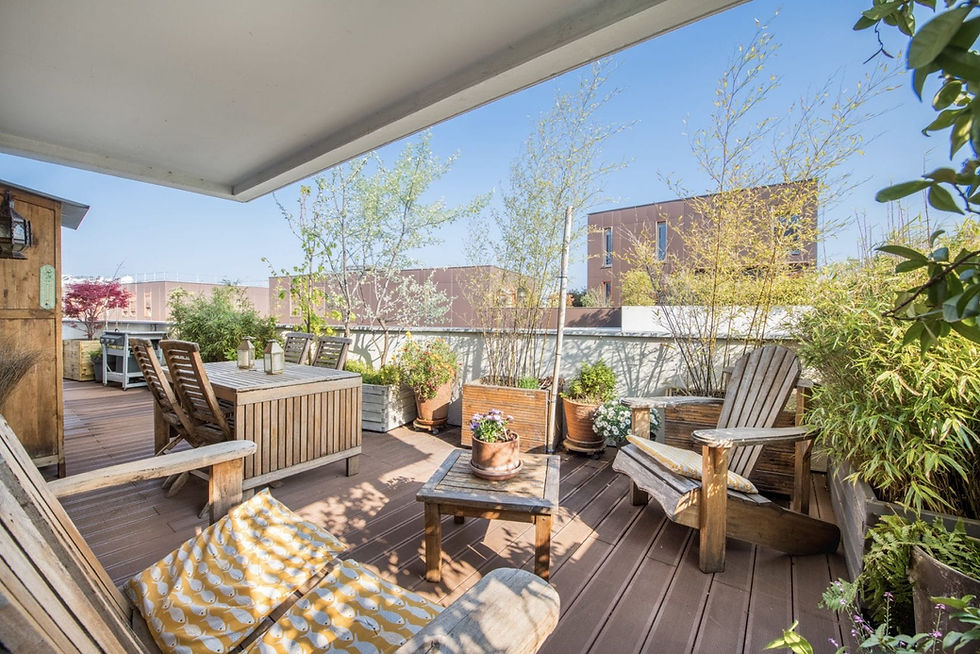
Hauts-de-Seine, a strategic department in the Paris region, is experiencing strong demand for furnished tourist accommodation. In response to this dynamic, local authorities have implemented a set of rules to regulate this activity, in order to preserve the residential real estate stock and ensure the harmonious development of the area. Stricter regulations for furnished tourist accommodation in Hauts-de-Seine have therefore been adopted.
1. Mandatory registration: Regulation of furnished tourist accommodation in Hauts-de-Seine
Since September 1, 2022, 12 municipalities in Hauts-de-Seine have required owners of furnished tourist accommodation to register at their town hall or online via the Déclaloc platform. The municipalities concerned are: Asnières-sur-Seine, Boulogne-Billancourt, Chaville, Courbevoie, Levallois-Perret, Meudon, Neuilly-sur-Seine, Puteaux, Rueil-Malmaison, Sèvres, Vanves, and Nanterre. This measure aims to ensure transparency in rental offers and facilitate municipal inspections. Failure to provide a registration number exposes landlords to fines of up to €5,000, and rental platforms can be fined up to €12,500 per listing.
2. Energy performance requirements
Law No. 2024-1039, known as the "Anti-Airbnb" law, promulgated on November 19, 2024, imposes strict energy performance criteria for furnished tourist accommodation. Since November 21, 2024, all new furnished tourist accommodation must present an Energy Performance Diagnosis (DPE) classified between A and E. As of January 1, 2034, this requirement will extend to all furnished tourist accommodation, whether new or existing.
3. Authorization for change of use: a regulated procedure
In some municipalities, including Courbevoie, Puteaux, and Saint-Cloud, renting out a second home as furnished tourist accommodation is subject to prior authorization for a change of use. This authorization is conditional on compensation, i.e., the placing on the market of equivalent accommodation intended for long-term rental. This measure aims to limit the conversion of residential accommodation into furnished tourist accommodation and to preserve the supply of housing for permanent residents.
4. Increased powers of municipalities
The law of November 19, 2024 strengthens the prerogatives of mayors in the regulation of furnished tourist accommodation. They can now establish quotas for authorizations for furnished tourist accommodation and reserve certain sectors, via the Local Urban Planning Plan (PLU), for construction intended for primary residences. In addition, municipalities can reduce the maximum rental period for primary residences for tourist purposes to 90 days per year, compared to 120 days previously. If this period is exceeded, owners are liable to a civil fine of up to €15,000.
5. Tax and reporting obligations
Owners of furnished tourist accommodation must declare their rental income in their annual tax return. The applicable tax allowances have been revised: 50% for classified furnished accommodation and guest rooms up to €77,700 in annual rental income, and 30% for unclassified furnished accommodation up to €15,000 in annual rental income.
6. Sanctions for non-compliance
Failure to comply with legal obligations exposes owners to financial penalties. Fines can reach €10,000 for failure to register a furnished tourist accommodation, and up to €20,000 for false declaration or use of a false registration number. In addition, municipalities now have increased powers to regulate furnished tourist accommodation.
7. Future prospects
The regulation of furnished tourist accommodation in Hauts-de-Seine is part of a national dynamic aimed at balancing tourism needs and the preservation of residential real estate. The measures taken by the municipalities and the department should contribute to the harmonious development of tourist activity, respectful of residents and the environment.
For owners wishing to comply with regulations, it is essential to stay informed of legislative developments and local specificities. Online tools, such as the Déclaloc platform, facilitate the registration and declaration procedures. By respecting legal obligations, owners can contribute to responsible and sustainable tourism in Hauts-de-Seine.
Conclusion
The regulation of furnished tourist accommodation in Hauts-de-Seine represents a major turning point in the management of tourist rentals in dense urban areas. In response to an explosion in short-term rentals, often at the expense of permanent housing, local and national authorities have implemented an increasingly structured legal framework, combining transparency, oversight, and quality incentives.
Between mandatory registration, energy constraints, tax regulations, and usage limitations, owners must now demonstrate rigor and responsibility if they wish to continue offering their property for tourist rentals. These rules aim to strike a balance between economic development, regional attractiveness, and the preservation of the residential fabric.
For local authorities, it is a territorial management tool; for residents, it provides protection against the desertification of neighborhoods into permanent housing; and for travelers, it provides assurance of more regulated and higher-quality accommodation.
It is therefore crucial for any rental company or investor in Hauts-de-Seine to stay informed, anticipate upcoming regulatory changes—particularly regarding energy—and view these regulations not as a constraint, but as an opportunity for professionalization. Because, in the long term, only a well-regulated tourist rental business will be able to continue in a changing urban context.


